The easiest YouTube video ideas are the ones you can make without filming anything. Think of a Top 10 list, an explainer ("how X actually works"), a what-if, a versus video, a short history of something, or a tour of a place told with maps and footage. Each one needs a topic, a script and visuals that already exist, so you can make it this week with no camera, no studio and no face on screen.
Below are 78 video ideas sorted by format, each with an example title you can adapt. They suit a faceless channel, but they work just as well if you film yourself. After the list: how to find your own ideas with YouTube's free tools, how to pick the one worth making first, and the kinds of "easy" videos that get channels refused for monetization.
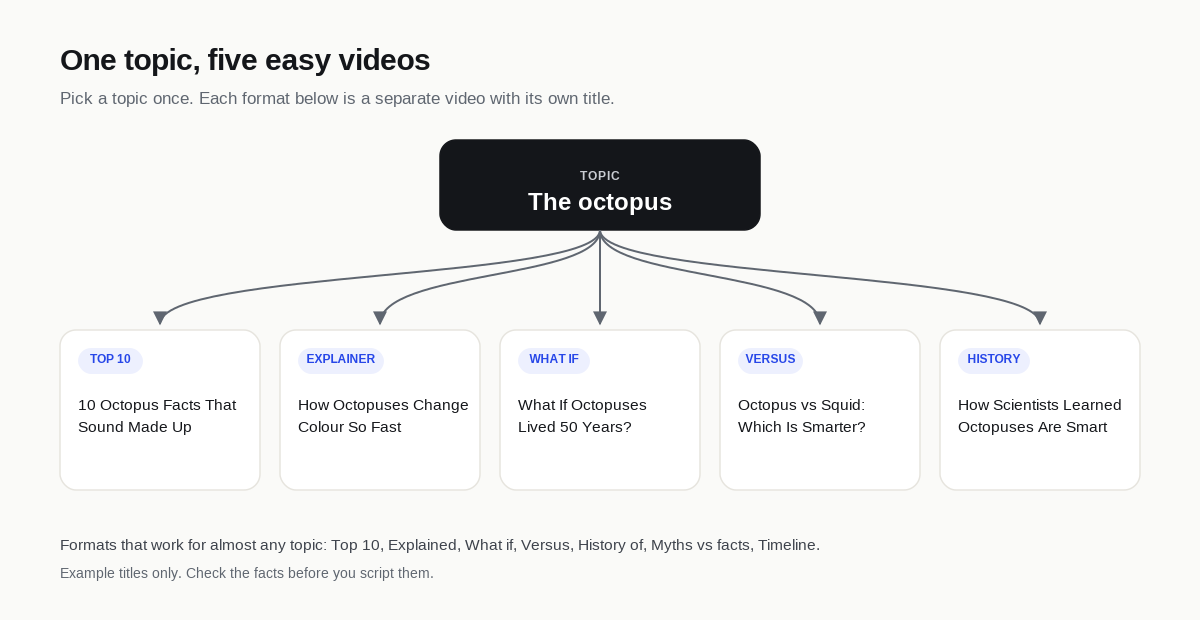
Key takeaways: (1) An idea is easy when the research fits in an hour and the visuals already exist. (2) Formats beat topics: Top 10, Explained, What if, Versus and History of work for almost any subject. (3) One topic can give you five videos (see the diagram below). (4) Easy is not the same as low effort: a script you wrote and a point of view are what YouTube pays for.
What makes a YouTube video idea easy?
A video idea is easy when four things are true. If one is missing, the idea gets slow or expensive, however simple it sounds.
| Test | Easy | Hard |
|---|---|---|
| Can you research it in about an hour? | "How the Everglades actually flows": a few good sources explain it | "The full history of the Roman Empire": a book, not a video |
| Do the visuals already exist? | Animals, places, space, history: free and archive footage is everywhere | A private event, a new product nobody has filmed, a person you can't show |
| Does the title promise one clear thing? | "Why Humpback Whale Songs Change Every Year" | "Whales: Everything You Need to Know" |
| Will it still be true next year? | Evergreen: geography, science, history | News: dead in a week, and a race against big channels |
A faceless video is one where nobody appears on camera: a narrator speaks over footage, maps, photos and graphics. Most of the ideas below are built for that format.
The second test matters most for faceless videos. If you won't film, every sentence of the script needs a picture that already exists. That is why nature, space, history and geography are the classic faceless subjects: NASA, Wikimedia Commons, the Internet Archive and the free stock sites have footage for almost every line. Our list of free stock footage sites for YouTube shows where to find it and which licenses are safe on a monetized channel.
The trick: one topic, five videos
You don't need 78 topics. You need a handful of topics and a few formats. A format is the shape of the video (a ranking, an explanation, a comparison), and almost any topic fits five or more of them. Research the topic once and you have material for a week of uploads.
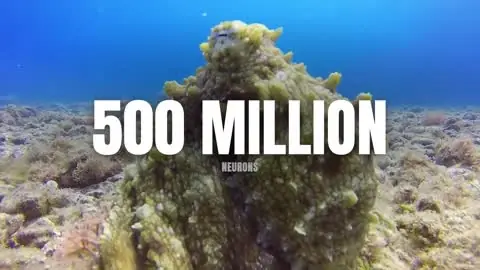
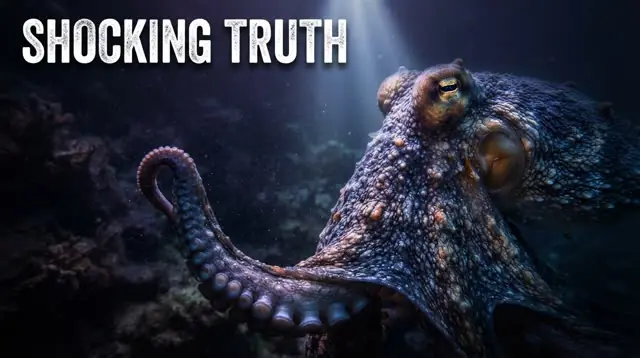
Here is what that looks like when it's made. This frame is from an octopus video VidGenn made: real underwater footage, with a graphic on the number the narrator is saying.
Top 10 and ranking video ideas
Rankings are the easiest format to script, because the structure is already done: an intro, ten short sections, a payoff at number one. They also get clicked, because a number in the title tells people exactly what they're getting. Keep each item to one surprising fact, and save the best for last so people watch to the end.
- Most remote places on Earth: "10 Places So Remote Almost No One Has Been There"
- Strangest animals of one habitat: "10 Deep Sea Animals That Look Fake"
- Hotels or buildings: "10 Hotel Rooms You Won't Believe Exist"
- Abandoned places: "10 Abandoned Cities and Why Everyone Left"
- Mysteries: "10 Ancient Mysteries Scientists Still Can't Explain"
- Inventions: "10 Accidental Inventions We Use Every Day"
- Natural wonders of one country: "10 Natural Wonders of Iceland, Ranked"
- Disasters: "10 Engineering Disasters That Changed the Rules"
- Space: "10 Biggest Things in the Universe, Smallest to Largest"
- Records: "10 Animals That Live the Longest"
We wrote a whole guide on making these: the best AI for Top 10 YouTube videos, built around a hotel-rooms countdown VidGenn made.

Explainer video ideas: "how X actually works"
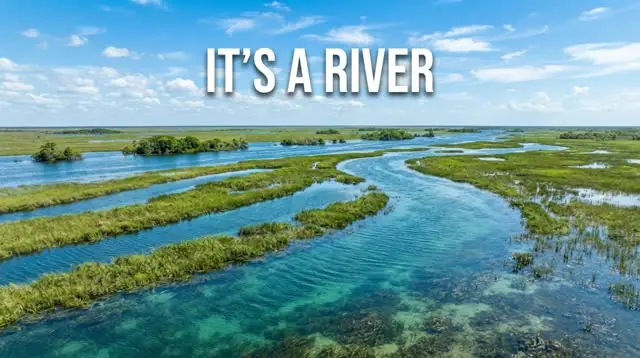
Explainers answer one question people already type into search, so they keep getting views for years. The title is the question; the video is the answer, with a picture for every step. Good explainers start with the surprising part ("it's not a swamp, it's a river") and then show why.
- "How the Everglades Actually Flows (It's a River, Not a Swamp)"
- "Why Is the Ocean Salty but Rivers Aren't?"
- "How Do Planes Stay in the Air? The Simple Answer"
- "Why Humpback Whale Songs Change Every Year"
- "How Sharks Sense Electric Fields"
- "How Did Pyramids Get Built Without Machines?"
- "Why the Sargasso Sea Has No Coastline"
- "How GPS Knows Where You Are"
- "Why Do We Have Leap Years?"
- "How Volcanoes Are Measured and Predicted"
What-if video ideas
What-if videos are easy to make interesting because the premise does the work. The trick is to answer with real science or history, step by step, so the video teaches something instead of just guessing. Each step needs a picture, so pick what-ifs whose steps can be shown: oceans, planets, cities, animals.
- "What If the Moon Disappeared?"
- "What If Every Volcano Erupted at Once?"
- "What If You Fell Into the Mariana Trench?"
- "What If the Earth Stopped Spinning for One Second?"
- "What If Humans Vanished? The First 10 Years"
- "What If Dinosaurs Never Went Extinct?"
- "What If the Ice Caps Melted Tomorrow?"
- "What If You Lived on Mars for a Year?"
Versus and comparison video ideas
A versus video compares two things people already argue about. It's easy to script (the same three or four rounds for both sides) and easy to illustrate (side-by-side footage and a scoreboard graphic). End with a clear winner; viewers who disagree will say so in the comments, which helps the video.
- "Octopus vs Squid: Which Is Smarter?"
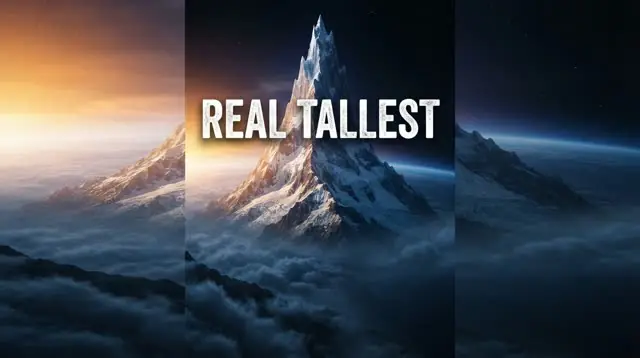
- "Mount Everest vs Mauna Kea: Which Is Really Taller?"
- "Lion vs Tiger: Who Would Really Win?"
- "Ancient Rome vs Ancient Greece: Which Lasted Longer?"
- "Saturn vs Jupiter: Which Is the Stranger Planet?"
- "Great Wall of China vs Hadrian's Wall"
- "Amazon vs Nile: Which River Is Longer?"
- "Titanic vs Lusitania: Two Sinkings Compared"
History and "last day of" video ideas
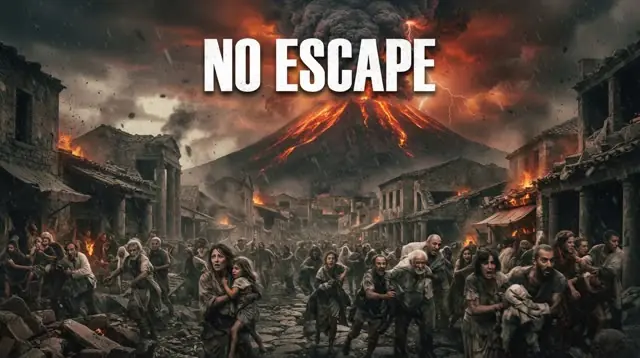
History is the biggest faceless documentary niche, and it has the most free footage: archive film, paintings, maps and photographs in the public domain. The easiest history videos tell one event, one day or one person in a few minutes, not a whole era. A timeline graphic does a lot of the explaining for you.
- "The Last Day of Pompeii, Hour by Hour"
- "The 16 Weeks That Saved Britain" (the Battle of Britain)
- "How the Titanic Sank in 2 Hours and 40 Minutes"
- "The Day the Berlin Wall Fell"
- "Why Constantinople Fell in 1453"
- "The Year Without a Summer (1816)"
- "How One Telegram Pulled the US Into World War I"
- "The Real Story of the Trojan Horse"
- "The Lost Colony of Roanoke: What We Actually Know"
- "How Apollo 13 Got Home"
For a history channel, our guide to the best AI for history YouTube videos covers the tools, and how to write a documentary script covers the writing.
Places and geography video ideas
Geography videos are mostly maps, aerial footage and a good question. People search them constantly ("why is this border so strange?"), and the visuals are easy: a map with an animated line or highlight explains more than any presenter could.
- "Why Does This Country Have Such a Weird Border?"
- "6 Borders That Make No Sense"
- "Why Almost Nobody Lives in Northern Canada"
- "The Only Sea With No Coastline"
- "Why Is Egypt's Population All Along One River?"
- "How Venice Was Built on Water"
- "Why Russia Has 11 Time Zones"
- "The Most Isolated Island on Earth"
Science, space and nature video ideas
Nature and space footage is plentiful and free (NASA's media library alone covers most of space), and the subjects never go out of date. Pick one animal behaviour, one planet or one experiment per video.
- "How Octopuses Solve Puzzles"
- "What Voyager 1 Has Seen Since 1977"
- "Why Flamingos Are Pink"
- "How Trees Talk to Each Other Underground"
- "What's Actually at the Bottom of the Ocean"
- "How Big Is the Sun, Really?"
- "Why Cats Always Land on Their Feet"
- "How Bees Choose a New Home"
Money, business and "explained" ideas
Business and finance explainers earn some of the highest ad rates on YouTube, because advertisers want that audience. Stick to how things work and what happened. Avoid investment tips: they need expertise, and they date fast.
- "How Netflix Almost Went Bankrupt"
- "Why IKEA Is So Cheap"
- "How Credit Card Companies Actually Make Money"
- "The Rise and Fall of Blockbuster"
- "Why Costco Hot Dogs Still Cost $1.50"
- "How Airlines Decide Ticket Prices"
- "What Caused the 2008 Financial Crisis, Simply Explained"
- "Why Gold Is Valuable"
Biography and mystery video ideas
Short biographies and unsolved mysteries hold attention because they're stories: a start, a turn and an ending (or a missing one). Tell one turning point of a life, not a whole life. For mysteries, separate what is known from what is guessed.
- "How Cassius Clay Became Muhammad Ali"
- "How Marie Curie Discovered Radium"
- "The Man Who Sold the Eiffel Tower. Twice."
- "What Really Happened to Amelia Earhart?"
- "The Voynich Manuscript: The Book No One Can Read"
- "The Dyatlov Pass Incident, Explained"
- "How a Teenager Built the First Computer Game"
- "The Mary Celeste: A Ship Found With No One On Board"
Using a real person? Archive photos are often public domain; recent photos usually aren't. Our biography guide explains how to illustrate a life story safely.
How to find your own easy video ideas
Lists like this one run out. These free tools give you ideas that people are already searching for:
- YouTube search suggestions. Type "why is", "how did" or "what if" plus your topic and read the suggestions. Each one is a real search.
- The Trends tab in YouTube Studio. In Studio, go to Analytics, then Trends. It shows what your audience and viewers of similar channels search for on YouTube, and breakout videos from channels like yours (YouTube Help).
- Ask Studio. YouTube's AI assistant inside Studio brainstorms ideas from your channel's data. YouTube is phasing out the older Inspiration tab from August 2026 and recommends Ask Studio instead (YouTube Help). Treat its ideas as a start: YouTube itself warns they can be inaccurate.
- Your comments. Questions under your videos (and under bigger channels in your niche) are video titles waiting to be made.
- "On this day" pages. Wikipedia's anniversaries and the history sections of museum sites give you a dated event for almost every day of the year.
- Reddit and forum questions. Subreddits like r/explainlikeimfive and r/AskHistorians are full of questions real people want answered.
YouTube's own creator blog lists more ways to come up with ideas, including turning one strong video into a series (YouTube Official Blog).
How to pick which idea to make first
Score each idea from 0 to 2 on three questions and make the highest score first:
| Question | 0 | 1 | 2 |
|---|---|---|---|
| Do people search for it? | No suggestions appear | A few suggestions | Suggestions and big videos on it |
| Can you show every sentence? | No footage exists | Some, with gaps | Plenty of free or archive footage |
| Can you say something new? | Same as the top video | A new angle | A new fact, or a clearer explanation |
The third question is the one beginners skip. If the top three videos on a topic already say what you would say, your video needs a new angle: a newer fact, a narrower question, or a clearer explanation. That is also what keeps a channel on the right side of YouTube's monetization rules.
"Easy" ideas that get channels refused
Some ideas are easy because someone else did the work. YouTube doesn't pay for those. Its monetization policies refuse reused content (other people's videos with little of your own added) and inauthentic content (mass-produced or repetitive videos, such as the same template with only the words changed). Avoid:
- compilations of other people's clips with no commentary or story of your own;
- reading a Wikipedia article or a news story aloud over stock footage;
- 100 near-identical videos from one template ("Fact #1", "Fact #2"…);
- slideshows of images you found on Google, which also risk copyright strikes.
AI tools are allowed. What matters is that the video is original and adds value. We explain the rules in detail in can you monetize AI documentaries on YouTube, and the numbers you need in how to get monetized on YouTube.
From idea to finished video
Once you've picked an idea, a faceless video takes five steps: write the title, write the script, record the narration, put a picture on every sentence, and edit. You can do each step yourself (see how to make faceless YouTube videos with AI), or let one tool do them together.
VidGenn does all five from a single topic. You type the idea ("the last day of Pompeii"), choose a title, edit the researched script line by line and pick a narrator. You get a 3 to 20 minute video with licensed real footage, a motion graphic on every fact, and a credits file for your description. Plans start at $19 a month for 30 minutes of finished video.
Turn one of these ideas into a video
Common questions
What is the easiest type of YouTube video to make?
A Top 10 list or a short explainer. Both have a fixed structure, need about an hour of research, and can be made entirely from existing footage, maps and graphics, with no filming.
What videos can I make without showing my face?
Rankings, explainers, what-ifs, versus videos, history, geography, nature, space, biographies and mysteries all work faceless. You narrate (or use an AI voice) over footage, maps and graphics. See our 48 faceless YouTube channel ideas for whole channels built this way.
How do I come up with YouTube video ideas every week?
Pick a few topics and rotate formats: one topic gives you a Top 10, an explainer, a what-if, a versus and a history video. Refill the list from YouTube search suggestions, the Trends tab in YouTube Studio, and the questions in your comments.
Are easy videos bad for a channel?
No. Easy to make is fine; easy to copy is the problem. A video with your own script, a clear angle and properly licensed footage can be simple to produce and still be good enough to monetize.
How long should an easy YouTube video be?
As long as the idea needs. Most of the ideas here work at 3 to 10 minutes. Longer videos earn more watch hours per view, which matters for the Partner Program, but only if people keep watching.