A history video lives or dies on two things: pictures of the real past, and a story told in the right order. Viewers of a Battle of Britain or Pompeii video expect to see the actual aircraft, the actual ruins, a map of where it happened and the dates in sequence. An AI tool for a history channel has to deliver both, and stay on the right side of copyright while doing it.
This guide compares six AI video tools for faceless history channels. VidGenn, which publishes this guide, is one of them and is our pick for most history channels. You will also find where the others do better: longer videos, a free trial, or a research database.
How we checked: every price and feature comes from each vendor's own pricing page on 6 November 2026, in US dollars, billed monthly. Minutes marked "about" are worked out from the vendor's own numbers. Prices change often, so check before you buy.
Quick picks
- Best overall for history channels: VidGenn, with real archive footage, maps and timelines from $19 a month
- Best for 30 to 60 minute history documentaries: VidRush
- Best for research before you write: Subscribr
- Best if you want a free trial first: Pictory (14 days, 10 minutes)
- Best for dramatized scenes rather than archive pictures: Vid.AI
What a history video needs from an AI tool
Real pictures, not invented ones
History is the niche where AI-generated footage hurts most. A generated Spitfire or a generated Roman street looks plausible but shows something that never existed, and history viewers notice. Archive photographs, public-domain films and museum scans are what make a history video credible. The best tools search those archives for you and tell you where every picture came from.
Maps, dates and timelines
History is about where and when. A map with the front line, a dateline over a launch, or a timeline of the sixteen weeks of a battle explains in two seconds what narration needs twenty for. Look for a tool that adds those graphics on the sentence that states the fact, not one that leaves you to build them in an editor.
Footage you are allowed to use
Film and TV clips are owned by someone, and YouTube's reused content policy can demonetize a channel built on them. Old material is often free: Wikimedia Commons, the Library of Congress's free-to-use collections, Internet Archive public-domain films and US government photos. Our guide to copyright-safe documentary footage lists the sources and how to credit them.
Long enough to earn
Most history videos run 8 to 20 minutes. YouTube lets you place mid-roll ads on monetized videos of 8 minutes or longer, and history is part of the Education & Science group that had the highest median RPM ($10.22) in AIR Media-Tech's 2025–26 data. Our niche guide has the full numbers.
The six tools compared
| Tool | Starts at | Price per minute | Longest video | Visuals | Free trial |
|---|---|---|---|---|---|
| VidGenn | $19/month | $0.63 → $0.44 | 20 min | Licensed archive and stock footage + motion graphics | No |
| VidRush | $99/month | $2.18 → $1.56 | 60 min | Real footage | No |
| VidEdge | $79.99/month | $2.10 → $1.55 | 30 min | Real footage, avatars, animation | No |
| Pictory | $29/month | $0.97 → $0.66 | 30 min | Getty and Storyblocks stock + AI images | 14 days, 10 min |
| Subscribr | $99/month | $1.50 → $1.20 | 3 hours | AI-generated, 14 styles | Free plan, no video |
| Vid.AI | $59/month | about $1.48 → $0.66 | 20 min (60 on Plus and Pro) | AI-generated video | No |
VidGenn: best overall for history channels
VidGenn turns a topic such as "the 16 weeks of the Battle of Britain", or your own script, into a finished 3 to 20 minute documentary. It writes title options and a researched script, narrates it with one of 24 ElevenLabs voices, and finds licensed footage for every sentence from Wikimedia Commons, Internet Archive, NASA, Openverse, Pexels and Pixabay. Every source goes into a credits file for your description.
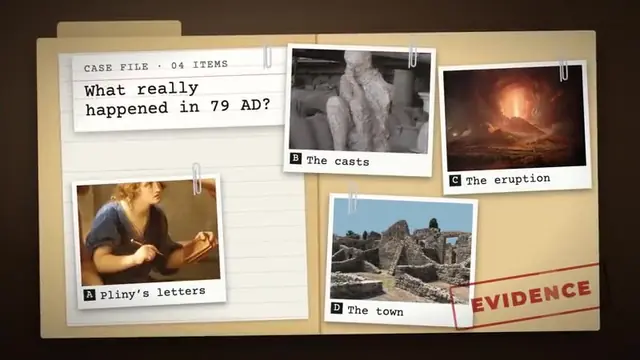
What makes it fit history is the graphics. Each fact gets a motion graphic on the sentence that states it: a dateline, a map with a pinned town, a timeline, a case-file board or a period document. You can change any graphic's text or swap any shot in the editor before you render.
- Best for: history, war, biography and "what really happened" channels that publish 8 to 20 minute videos.
- Good: the lowest price per minute here, real archive pictures with a credits file, maps and timelines built in, and full control of the script.
- Watch out: no free trial, English only, and videos stop at 20 minutes.
Price: Starter $19 a month for 30 minutes, Creator $38 for 60 minutes, Pro $79 for 180 minutes ($0.44 a minute). See plans.
VidRush: best for 30 to 60 minute documentaries
VidRush makes long documentaries and Top 10 videos with real footage, from 6 to 60 minutes. If your history channel publishes hour-long deep dives, it is one of the few tools that goes that far from a single brief.
- Good: videos up to 60 minutes; unused credits roll over (up to half a month's); 20% off yearly.
- Watch out: starts at $99 a month, about $2.18 a minute, with no free trial; refunds only if no credits were used.
Side by side: VidGenn vs VidRush.
VidEdge: real footage plus other styles
VidEdge makes faceless videos in four styles: real footage, AI avatars, animation and musical, up to 30 minutes. A history channel that wants to mix archive-style episodes with animated ones can do both in one tool.
- Good: four styles, scripts and thumbnails in every plan, videos up to 30 minutes.
- Watch out: real-footage minutes start at $2.10 each, other styles give fewer minutes, and all charges are final.
Pictory: try it free with your own script
Pictory turns a script, article or link into a video with stock footage from Getty and Storyblocks, plus AI images. It is built for marketing and explainer videos rather than documentaries, but a history channel that already writes its scripts can test it free for 14 days (10 minutes of video, 720p, with Pictory branding).
- Good: the only free trial here that makes real videos; up to 40% off yearly.
- Watch out: stock libraries have little true archive material; minutes are "up to" and go faster with AI visuals; no refunds.
Subscribr: research first, video second
Subscribr began as a YouTube research and scripting tool, with a database of 35 million videos, and now makes videos up to 3 hours long with AI-generated visuals. It suits a history creator who wants help finding topics that already work on YouTube.
- Good: research and scripts, a free plan for ideas, very long videos.
- Watch out: video plans start at $99, the visuals are generated rather than archival, and all sales are final.
Vid.AI: dramatized scenes with AI video
Vid.AI makes long videos and Shorts with AI video models (Veo, Seedance, Kling), up to 60 minutes on its bigger plans. Generated footage is not a record of the past, so it fits "what it might have looked like" storytelling better than a documentary about real events. If you show realistic generated scenes of real events, YouTube asks you to label them as altered or synthetic.
- Good: cinematic generated scenes, Shorts as well as long videos, refunds on unused credits within 30 days.
- Watch out: generated pictures aren't real history; starts at $59 with no free trial.
Example: a history video made with VidGenn
Our Pompeii example started from one line, "the last day of Pompeii in 79 AD". VidGenn wrote the script around the timeline of the eruption, matched each sentence to archive photos of the ruins and the plaster casts, and placed graphics on the facts: a definition card for a "Plinian" eruption, a myth-versus-fact card, and the case-file board above.
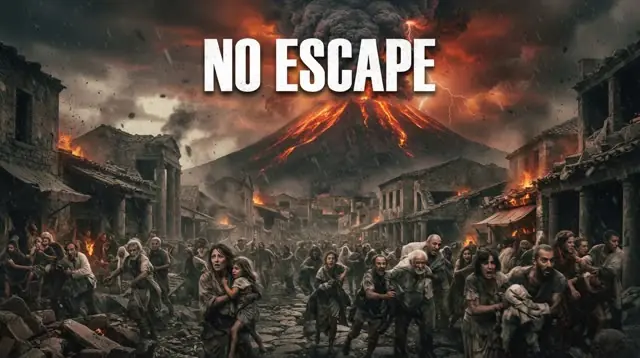
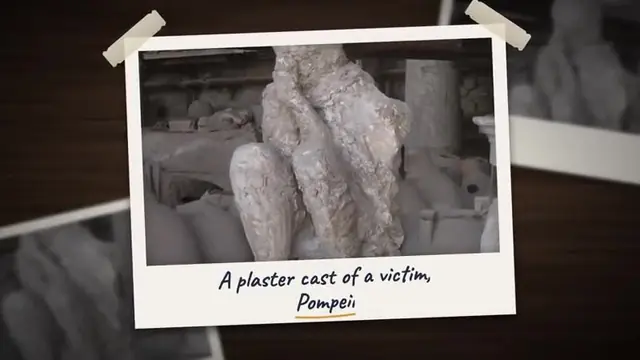
The same workflow works for wars, empires, inventions and biographies of historical figures. Topics before about 1930 have the most free pictures; recent events, sport and film history have the fewest, because their photos are almost all owned by someone.
How to choose
- How long are your videos? Up to 20 minutes: VidGenn costs the least per minute. 30 to 60 minutes: VidRush. Longer: Subscribr.
- Do you need real archive pictures? For documentaries about real events, pick a tool that uses real footage (VidGenn, VidRush, VidEdge) over generated video.
- Do you want graphics done for you? Maps, dates and timelines on every fact save the most editing time.
- Do you want to try first? Pictory's 14-day trial is the only free way to make a full video here.
Make your first history documentary
Common questions
What is the best AI for history YouTube videos?
For most faceless history channels, VidGenn: it uses licensed archive footage, adds maps, dates and timelines on each fact, and costs $0.63 a minute or less. For videos over 20 minutes, VidRush goes to 60.
Can I monetize AI history videos on YouTube?
Yes, if your channel meets the Partner Program thresholds and each video is original: your own script and edit, not mass-produced templates or reused clips. Our guide to monetizing AI documentaries covers the rules.
Where do I find free footage for history videos?
Wikimedia Commons, the Library of Congress's free-to-use sets, Internet Archive public-domain films and US government photos. Check each file's license and credit it. Avoid clips from films and TV documentaries.